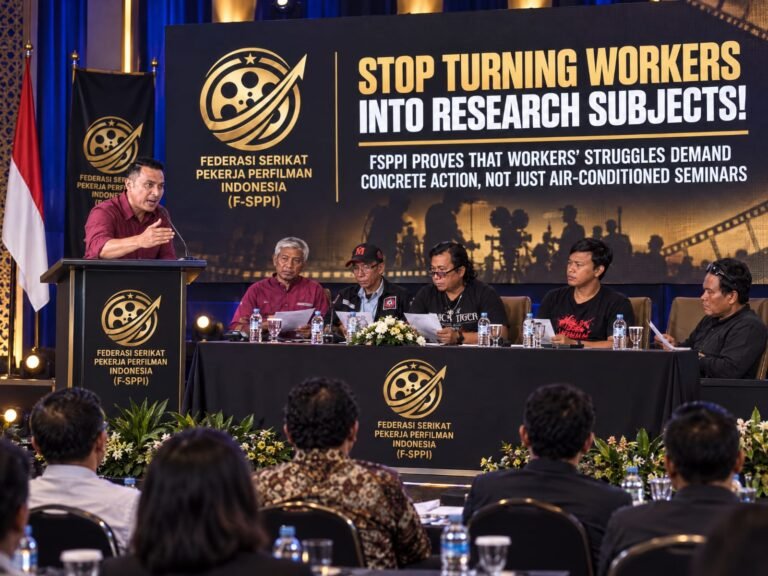

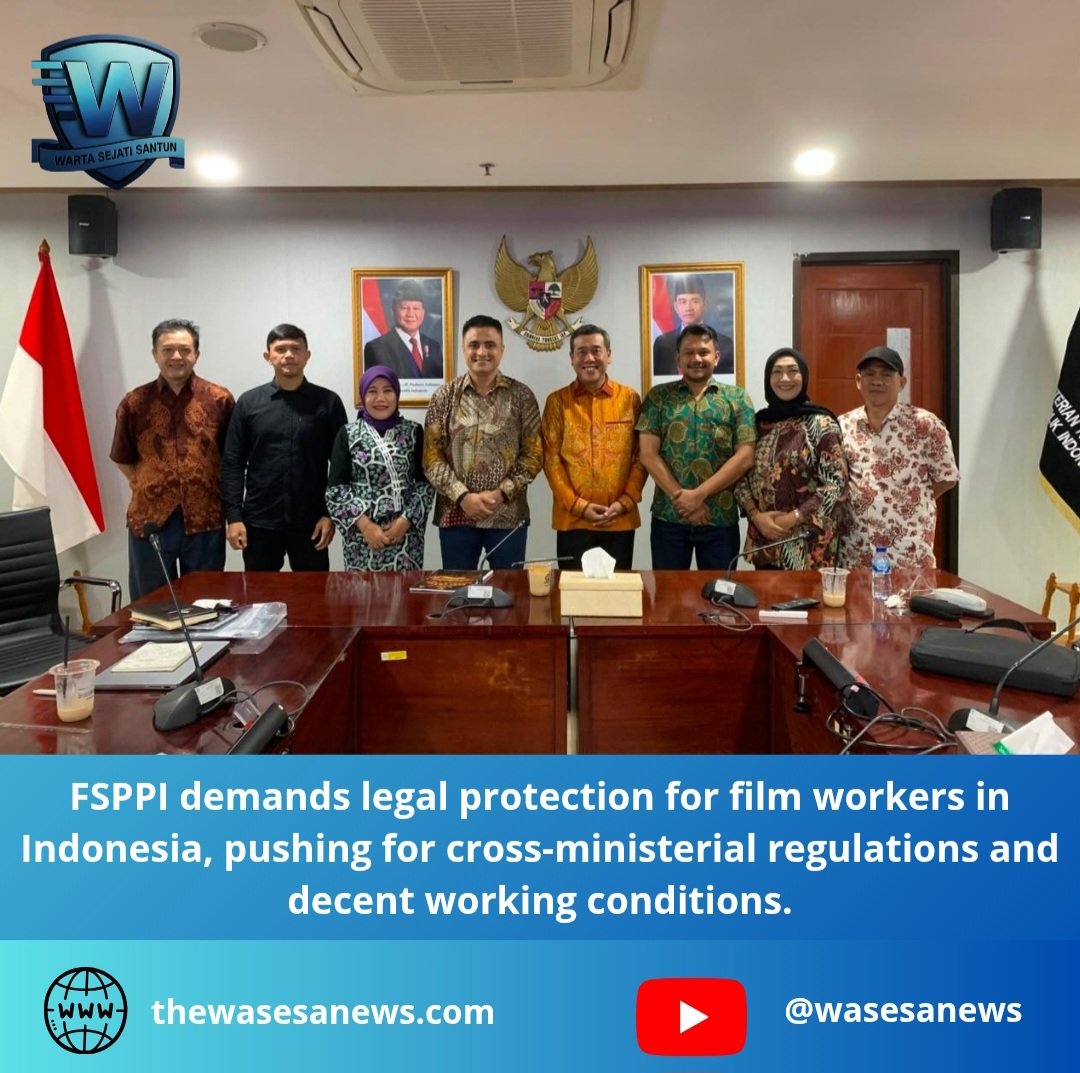
JAKARTA, thewasesanews.com — The Federation of Indonesian Film Workers’ Unions (FSPPI) is stepping up its efforts to secure legal certainty, decent working conditions and effective protection for workers across Indonesia’s film industry.
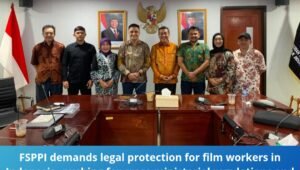
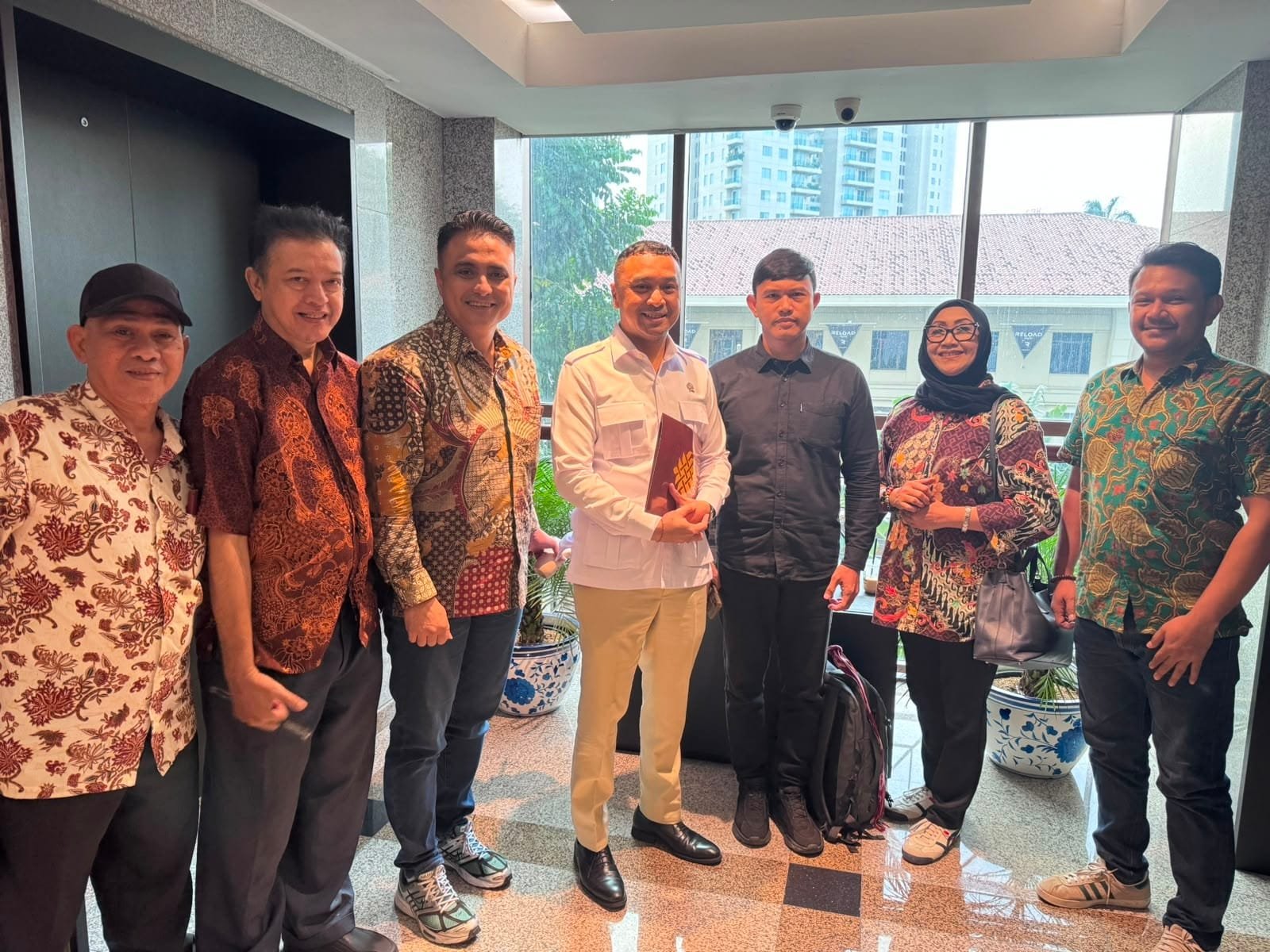
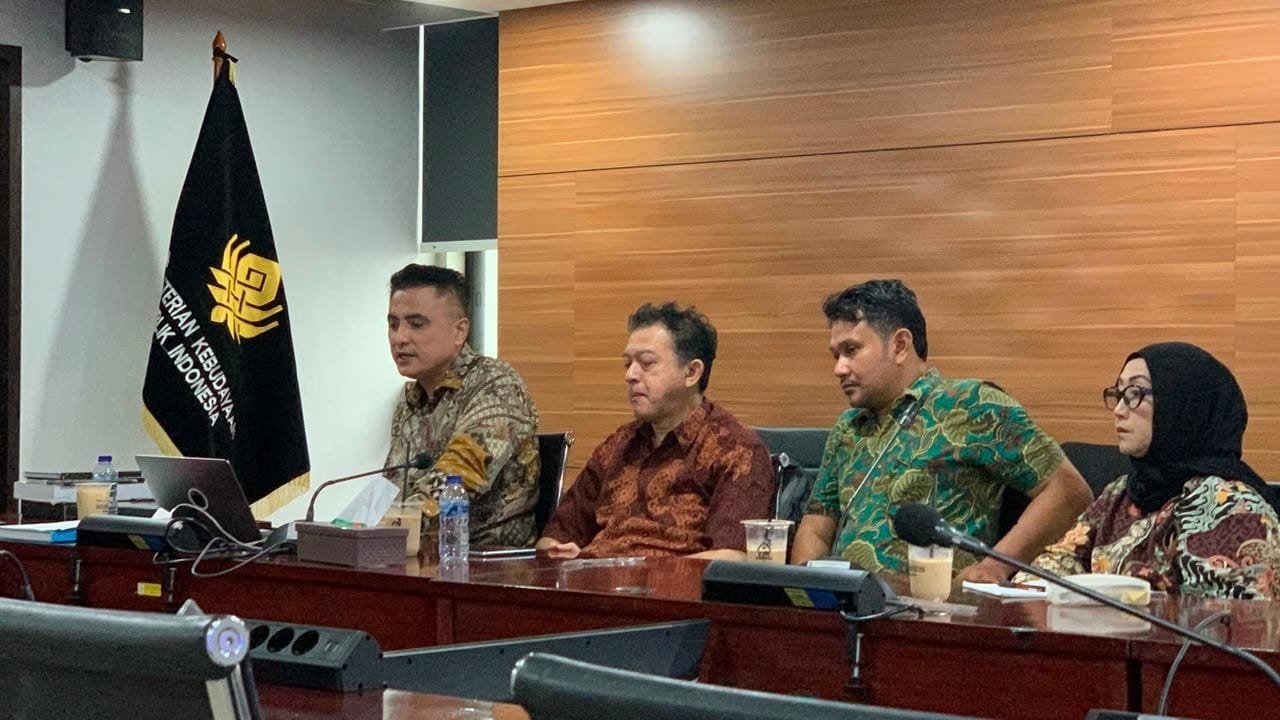
Led by Dr. Rizal Djibran, together with FSPPI officials Zulfikar, Ivan Wijaya, Rosita S., Awing Lee and Devri Dahler, FSPPI held an official meeting with Irini Dewi Wanti, S.S., M.SP., Director of Film, Music and Arts at the Ministry of Culture of the Republic of Indonesia. The meeting was facilitated by Ahmad Mahendra, M.Tr.A.P., Director General for Cultural Development, Utilisation and Promotion, and received a positive response from Deputy Minister of Culture Giring Ganesha, S.I.Kom.
The meeting formed part of FSPPI’s broader efforts to build government support for a more comprehensive regulatory framework for the film sector, including possible amendments to the Film Law, with the aim of ensuring that labour and employment considerations are integrated into film-sector governance.
Previously, on 18 August 2026, FSPPI met with Deputy Minister of Manpower Dr. Afriansyah Noor, M.Si., and officials of the Ministry of Manpower. Across these consultations, FSPPI has stressed the importance of placing workers’ rights and protection at the heart of the sustainable development of Indonesia’s film industry.
According to Dr. Rizal Djibran, the fundamental challenges facing Indonesia’s film sector concern not only production and creative output, but also the people whose work makes those productions possible.
«“When we talk about film, we are not only talking about creative works. We are also talking about the people who work to bring those works to life. They need legal certainty.”»
The film industry encompasses a wide range of occupations and employment arrangements, including fixed-term contracts, freelance work, project-based employment and other forms of engagement. However, film workers still lack a comprehensive regulatory framework that adequately reflects the specific characteristics of work in the sector.
Through its Film Research and Development Institute, FSPPI has undertaken an academic study identifying strong elements of an employment relationship within the film industry, as well as 16 areas of legal gaps and regulatory challenges across the production and distribution value chain.
These include employment status, contracts, wages and remuneration, working hours, rest periods, occupational safety and health (OSH), social security, dispute resolution, and the protection of workers throughout the film production and distribution chain.
Film as a Cross-Ministerial Ecosystem
FSPPI argues that the complexity of the film industry means that its regulation cannot rest with a single ministry.
The Ministry of Culture has responsibilities relating to film and cultural governance; the Ministry of Manpower oversees labour relations and worker protection; the Ministry of Creative Economy supports industry and business development; the Ministry of Primary and Secondary Education and the Ministry of Higher Education, Science and Technology contribute to talent development, research and innovation; while the Ministry of Communication and Digital Affairs plays a key role in digital distribution, platforms and technology.
FSPPI therefore calls for a coordinated, cross-government policy framework that recognises film as an integrated ecosystem encompassing culture, industry, technology and the world of work.
FSPPI emphasises that stronger regulation is not intended to place an unnecessary burden on the industry. Rather, it is aimed at creating greater certainty and a more sustainable environment for workers, production companies, investors and government alike.
«“The film industry cannot truly advance if the people who make it possible are not protected. Film may become a major industry, but the people behind it must not be left without legal certainty,” Rizal stressed.»
The consultations with the Ministry of Culture and the Ministry of Manpower mark a strategic step in FSPPI’s efforts to ensure that workers’ rights and employment protection are fully considered in the development of Indonesia’s national film-sector regulatory framework.
Because film is not only about what audiences see on screen. It is also about the thousands of people who work behind the scenes — and they are entitled to legal certainty, decent work and effective protection.
Source: Federation of Indonesian Film Workers’ Unions (FSPPI)