


JAKARTA, thewasesanews.com — F-SPPI supports KBPBI mass action led by Andi Gani Nena Wea as part of a collective effort by Indonesian workers to strengthen labour protections and workers’ rights, announced on Friday, September 18, 2026.
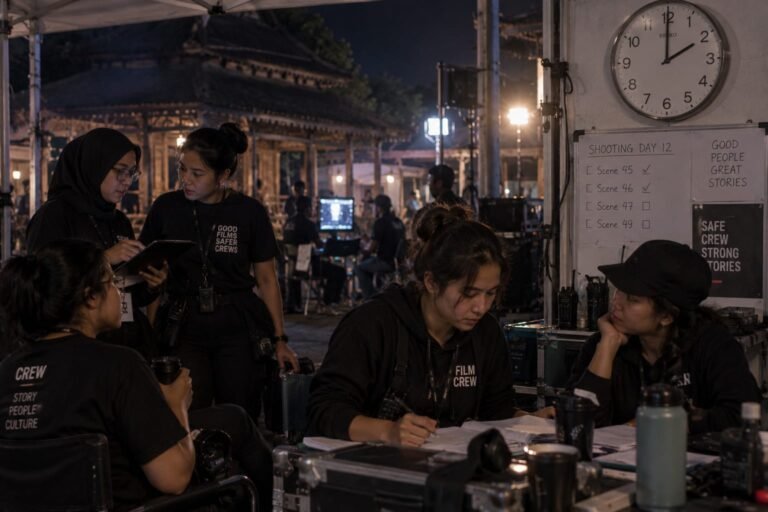
The Federation of Indonesian Film Workers’ Unions (F-SPPI), together with film workers’ unions across various departments, has formally expressed its full support for the planned mass mobilization by the Grand Coalition for the Struggle of Indonesian Workers (KBPBI).
F-SPPI stressed that the struggle for labour rights cannot be pursued on a sector-by-sector basis in an increasingly interconnected national economy.
Workers across industries and forms of employment need to build collective strength through consolidation, solidarity, and collective action to achieve meaningful legislative reform.
F-SPPI and participating film workers’ unions said they are prepared to take part in the broader struggle alongside workers from different sectors and industries.
The core philosophy driving this joint movement is that the strength of workers lies in unity, consolidation, and collective struggle across all occupational lines.
Regarding the legislative timeline, KBPBI has expressed deep dissatisfaction with the draft Labour Protection Bill received from the House of Representatives of the Republic of Indonesia (DPR RI), particularly regarding contract workers, outsourced workers, and platform workers.
The serious concerns were raised following a comprehensive public hearing held by Commission IX of the DPR RI on September 16, 2026.
During the parliamentary hearing, trade union representatives highlighted major gaps in the proposed legislation that leave vulnerable workers without adequate legal recourse.
The coalition has formally given the government and parliament until September 22 to respond to workers’ demands and rectify the substantive flaws in the bill.
If no adequate response is received from policymakers by the given deadline, KBPBI is considering a mass action in Jakarta, with an estimated participation of approximately 70,000 to 100,000 workers.
F-SPPI views the development as part of a broader process of consolidating workers’ collective strength to pursue stronger labour protections through joint action across sectors and industries.
Highlighting the overarching vision of the federation, Dr. Rizal Djibran, Chairperson of F-SPPI, emphasized that the struggle for labour rights requires workers’ unity and collective strength across all worker categories.
“F-SPPI supports the KBPBI action under the leadership of Andi Gani Nena Wea. The struggle for labour rights requires workers’ unity and collective strength. Film workers are part of Indonesia’s labour movement and are ready to stand alongside workers from different sectors in pursuing stronger labour protections and workers’ rights,” said Dr. Rizal Djibran.
Reinforcing this position, Zulfikar, Deputy Chairperson of F-SPPI, emphasized the strategic importance of inter-industry solidarity in national policy advocacy.
“The strength of the labour movement lies in workers’ ability to build consolidation across sectors and industries. F-SPPI supports the KBPBI action and is prepared to take part in collective efforts with workers from different sectors to strengthen workers’ positions and protections within national labour policy,” stated Zulfikar.
Representatives of film workers’ unions also expressed their support for the KBPBI mobilisation and stressed the importance of building unity among workers across sectors and industries.
Chaidar, Chairperson of the Media, Television and Film Workers’ Union, emphasized the interconnected nature of modern labor struggles across creative and industrial sectors.
“Workers’ struggles cannot be pursued separately. Film workers must be part of the collective strength of Indonesia’s labour movement and stand together with workers from other sectors,” said Chaidar.
Yamanigka, Chairperson of the Camera Workers’ Union, highlighted technical department solidarity in the demand for systemic safeguards.
“Worker protection requires collective strength. We support cross-sector consolidation and collective action to strengthen workers’ position,” noted Yamanigka.
Kiki Steven, Chairperson of the Production Management Workers’ Union, pointed out the universal application of employment safeguards across all fields.
“Labour issues do not stop at the boundaries of a single industry. Workers across sectors therefore need to build collective strength through consolidation and collective struggle,” stated Kiki Steven.
Awing Lie, Chairperson of the Action and Stunt Performers’ Workers’ Union, stressed the importance of standing together for high-risk professions in the media sector.
“No worker should have to struggle alone. We support collective action to build workers’ strength across sectors and advance stronger labour protections,” expressed Awing Lie.
Irvan Wijaya, Chairperson of the Film Screenwriters’ Workers’ Union, underlined the essential unity of creative and industrial labor forces.
“Unity among workers across sectors is an important source of strength in the struggle for labour rights. Film workers are ready to take part in collective efforts to strengthen workers’ rights and protections,” explained Irvan Wijaya.
Devri Dehler, Secretary of the Film Editors’ Workers’ Union, affirmed post-production worker commitment to the national agenda.
“The workers’ movement requires solidarity and collective strength. We support joint consolidation and cross-industry workers’ action to advance stronger labour protections,” stated Devri Dehler.
F-SPPI stressed that workers across the film industry—including screenwriting, directing, cinematography, art departments, sound, editing, production, and technical and support roles—are an integral part of Indonesia’s broader workforce.
Differences in occupations and industries should not become grounds for workers to remain fragmented or isolated from national legislative discussions.
Instead, differences in sectors and forms of work can provide a dynamic basis for building broader consolidation among workers facing shared employment challenges.
F-SPPI called for stronger worker organisations, worker education and collective awareness, cross-sector consolidation, and active worker participation in shaping national labour policy.
Workers’ struggles require unity across sectors, collective strength, and collective action to achieve lasting legal protections.
F-SPPI and the participating film workers’ unions reiterated their support for KBPBI under the leadership of Andi Gani Nena Wea and their readiness to take part in collective efforts alongside workers from different sectors and industries.
The federation will continue to monitor developments in the discussions through September 22, 2026, and determine its next organisational steps based on developments in the broader consolidation and collective struggle of workers.
Film workers are part of Indonesia’s labour movement, standing together with workers from different sectors in the collective struggle to strengthen labour protections and workers’ rights.
Source: F-SPPI & KBPBI Press Release