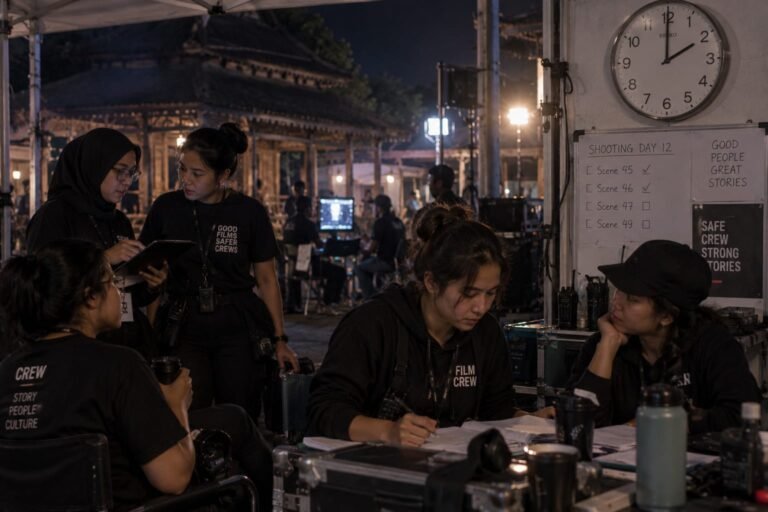

Jakarta, thewasesanews.com — The challenges facing Indonesia’s film workers are not new. Low and uncertain wages, insecure employment relationships, delayed or uncertain payments, limited access to social security, occupational safety risks, and inadequate worker protections have been raised repeatedly.
But the Federation of Indonesian Film Workers (FSPPI) is choosing not to stop at raising concerns.
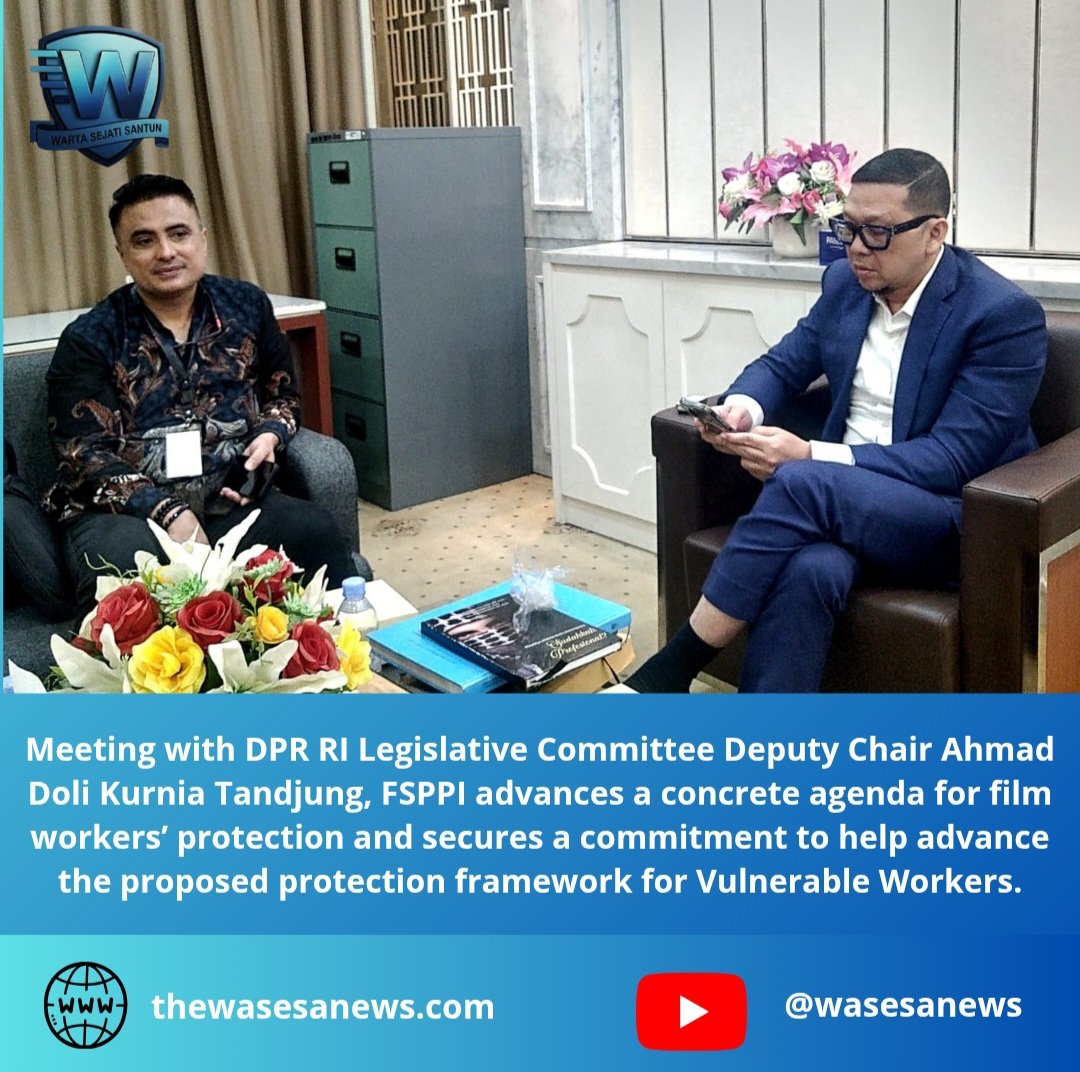
At a meeting with Ahmad Doli Kurnia Tandjung, Deputy Chair of the DPR RI Legislative Committee, FSPPI came with a concrete policy agenda: strengthening protection for film workers and urging the DPR RI Legislative Committee to help advance the draft proposal on Vulnerable Workers submitted by the Grand Coalition for the Struggle of Indonesian Workers (KBPBI), led by Andi Gani Nena Wea.
The proposal is particularly relevant to film workers, whose working conditions often involve project-based employment, short-term contracts, freelance arrangements, irregular income, and uncertainty between productions.
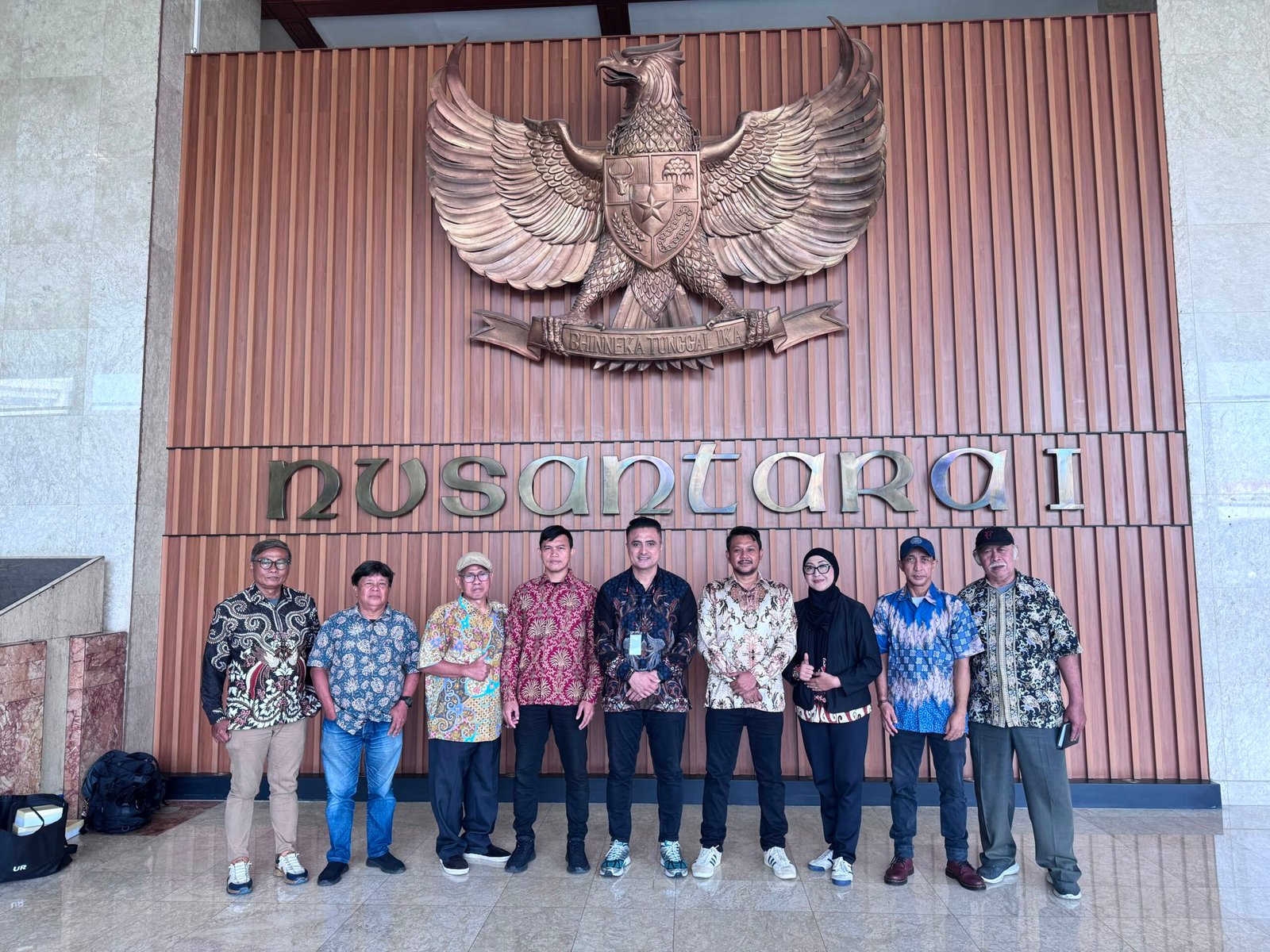
The meeting was attended by FSPPI Chairman Dr. Rizal Djibran; Deputy Chairman Zulfikar; Secretary of the Indonesian Film Performance Workers’ Union Rosita Simatupang; Chairman of the Indonesian Film and Television Media Workers’ Union Chaidar; representative of the Indonesian Film Production Management Workers’ Union Setven; representative of the Indonesian Film Art Department Workers’ Union Awing Lee; Camera Workers’ Union representative Yamaningka; Editors’ Union representative Devri; and Artistic Workers’ Union representative Masbro.
The participation of workers’ unions representing different areas of film production sends a clear message: protecting film workers is not the concern of one profession alone. It is a shared interest across the entire film production workforce.
BEYOND COMPLAINTS: A CONCRETE AGENDA FOR PROTECTION
FSPPI did not come to Parliament simply to present a list of grievances and leave with another expression of concern.
It came with an agenda for protection.
That agenda includes greater certainty in employment relationships, payment certainty, occupational safety and health, social security, protection against discrimination, and the right to organize.
These priorities are consistent with the fundamental principles of the International Labour Organization (ILO), including freedom of association, non-discrimination, and the right to a safe and healthy working environment.
Film workers must therefore be recognized for what they are: workers with rights, dignity, and a legitimate claim to protection.
The film industry is often seen through what appears on screen—actors, directors, cinematographers, lighting, and production.
But behind every film are people who contribute their time, skills, physical effort, creativity, and professional expertise, often under demanding and uncertain working conditions.
They cannot be celebrated when a film succeeds and forgotten when the discussion turns to their rights and welfare.
FILM WORKERS MUST BE PART OF THE VULNERABLE WORKERS AGENDA
One of the key issues raised by FSPPI was the need to ensure that the protection of film workers becomes part of the broader policy agenda for Vulnerable Workers.
The structure of film production creates particular vulnerabilities. Project-based employment, short-term contracts, freelance work, gaps between productions, and uncertain income can leave workers without stable employment or adequate social protection.
For FSPPI, the Vulnerable Workers agenda being advanced by KBPBI under the leadership of Andi Gani Nena Wea provides an important policy pathway to ensure that film workers are not overlooked in national labor protection measures.
FSPPI therefore called on the DPR RI Legislative Committee to help advance and oversee the proposed draft, so that the specific interests and working conditions of film workers can be properly considered in the policy process concerning Vulnerable Workers.
The request received a positive response from Ahmad Doli Kurnia Tandjung, who expressed his commitment to help advance and oversee the proposal.
For FSPPI, that commitment is an important outcome of the meeting. Legislative support provides an initial pathway for ensuring that the concerns of film workers do not remain merely aspirations, but can move into the policy-making process.
This is not simply about having film workers mentioned in a policy.
It is about ensuring that the people who work behind Indonesia’s film industry are recognized as part of the workforce and receive meaningful protection.
FROM THE WORKPLACE TO THE POLICY TABLE
FSPPI’s objective is to bring the realities faced by workers on the ground into the national policy-making process.
Workers’ hardships must not remain stories.
Problems must lead to research.
Research must produce recommendations.
Recommendations must inform policy.
And policy must deliver tangible benefits to workers.
That is why the meeting with the DPR RI Legislative Committee was more than a formal consultation.
It was part of a concrete advocacy effort to ensure that film workers have a place within the national agenda for the protection of Vulnerable Workers.
With the commitment expressed by the Deputy Chair of the Legislative Committee, FSPPI now has an important starting point from which to pursue the next stage of advocacy.
LIMITED RESOURCES. CLEAR TARGETS.
FSPPI recognizes that this struggle is being pursued with limited resources.
There are no lavish seminars in five-star hotels. No grand stages built merely for ceremony.
But there is one principle that remains firm:
Every movement must have a clear objective.
Go to Parliament with an agenda.
Meet government institutions with concrete proposals.
Conduct research that produces actionable recommendations.
And ensure that every meeting leads to follow-up.
For FSPPI, the success of workers’ advocacy is not measured by the number of activities organized or the amount of media attention generated.
It is measured by results.
Because workers cannot live on ceremonies.
Workers need certainty. Workers need protection.
NOT MORE SEMINARS. REAL PROTECTION.
The meeting with the DPR RI Legislative Committee is not the end of the struggle.
It is where the next phase begins.
FSPPI must continue to consolidate film workers, strengthen research and policy analysis, monitor the Vulnerable Workers proposal, engage relevant stakeholders, and ensure that the interests of film workers remain firmly on the policy agenda.
Film workers do not need more statements saying:
“We are concerned about the condition of film workers.”
They have heard those words too many times.
What they need are answers:
What protection will be provided?
Who will advance and oversee it?
What policy will be established?
And when will workers actually feel its impact?
Under the leadership of Dr. Rizal Djibran, FSPPI has chosen to move forward with limited resources, but with a clear policy direction and measurable objectives.
Because workers’ advocacy is not about how large the platform is.
It is about how effectively workers’ voices can be translated into policy—and how meaningfully that policy can improve their working lives.
FSPPI did not come to Parliament simply to have its complaints heard and then forgotten.
FSPPI came with an agenda.
FSPPI came with proposals.
FSPPI came to advocate for change.
So that film workers are not valued only when their labor is needed to make a film, but are also protected while doing that work.
Ultimately, the success of workers’ advocacy is not measured by how many times workers are heard.
It is measured by whether protection becomes real—and whether workers can actually feel its impact.
Source: Federation of Indonesian Film Workers (FSPPI)