

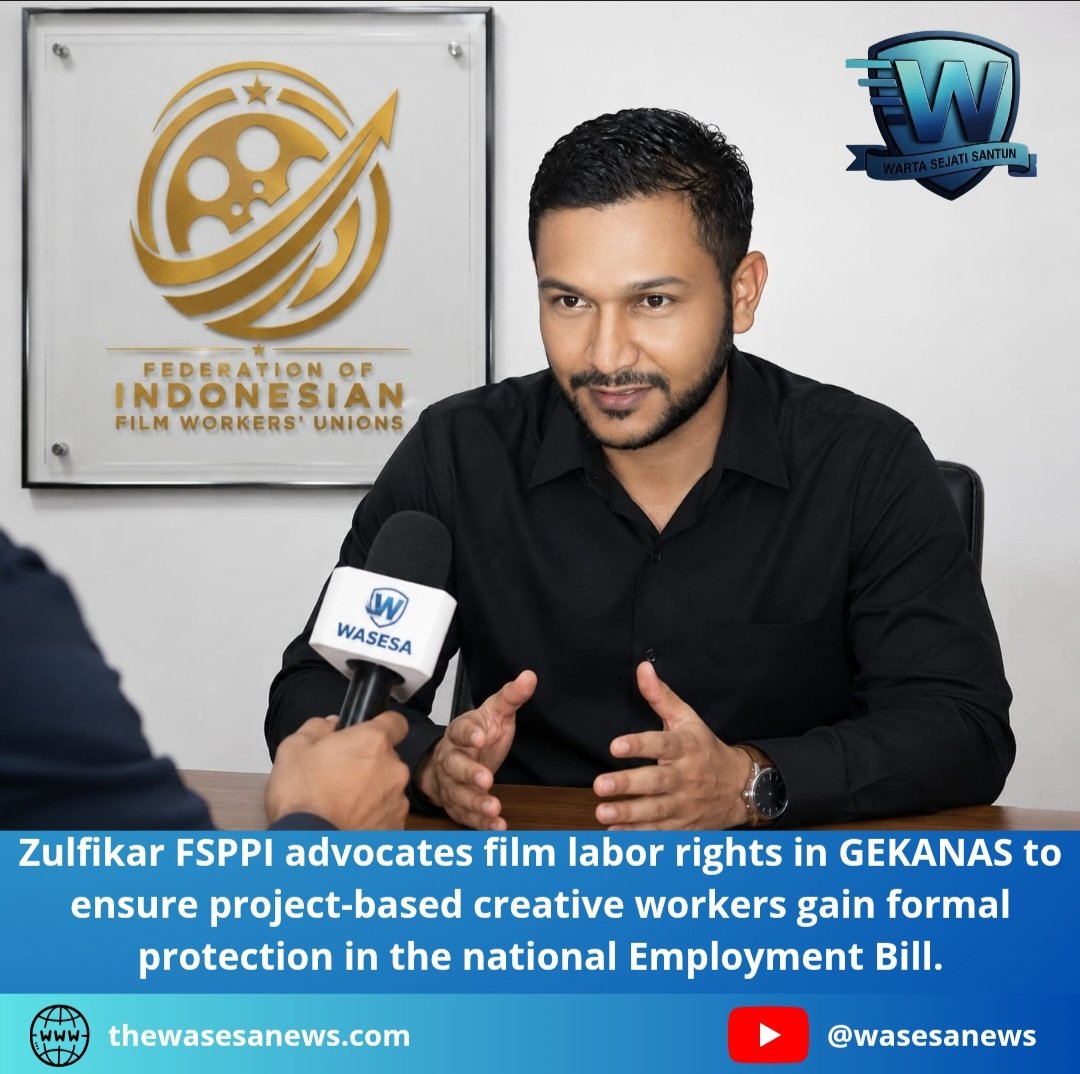
JAKARTA, thewasesanews.com – Zulfikar fsppi advocates film labor rights in gekanas after attending the national consolidation meeting of the National Welfare Movement (GEKANAS) on behalf of the Central Executive Board of the Federation of Indonesian Film Workers’ Unions (FSPPI) at the Central Executive Board Meeting Room of KEP KSPSI AGN, Jakarta, Wednesday (August 12, 2026). The attendance of FSPPI leadership represents a strategic initiative to integrate the unique perspectives, fundamental rights, and specific aspirations of film industry workers into the mainstream national labor movement, particularly in overseeing the draft of the upcoming Employment Bill (RUU Ketenagakerjaan).
Initially, FSPPI was scheduled to be represented directly by the Chairman of FSPPI, Dr. Rizal Djibran. However, as Dr. Rizal Djibran was fulfilling an official cultural performance agenda in Yogyakarta, the national representation mandate was formally delegated to the Deputy Chairman of FSPPI, Zulfikar.
The GEKANAS consolidation forum was attended by leaders from dozens of labor federations and trade unions spanning various industrial sectors. The meeting addressed several strategic priorities, including safeguarding the national labor policy agenda, receiving analytical updates from the GEKANAS research team, and finalizing preparations for a formal hearing with the House of Representatives of the Republic of Indonesia (DPR RI) scheduled for Thursday, August 13, 2026.
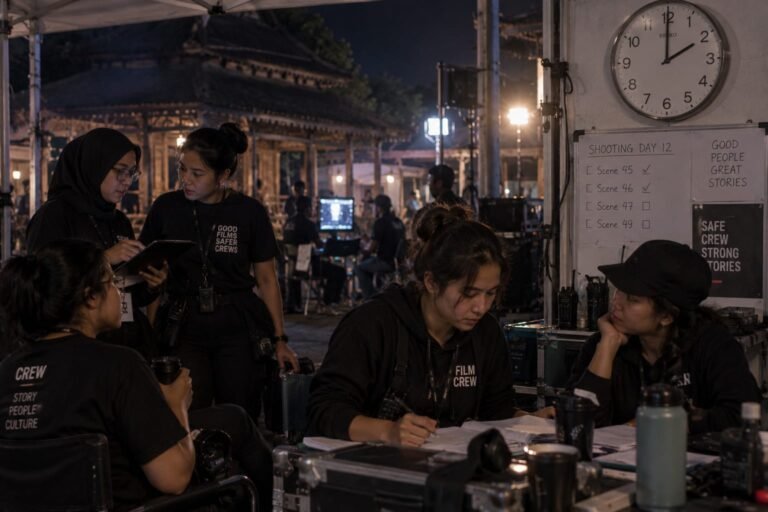
During the dynamic discussions, Zulfikar firmly underscored the necessity of statutory guarantees to ensure creative and film sector workers are not marginalized in national labor policy formulations. He pointed out that the film industry operates under distinct labor relationship dynamics compared to conventional manufacturing or corporate sectors. Film production encompasses an extensive professional chain characterized by project-based workflows, fixed-term production cycles, short-term contractual engagements, and a highly diverse workforce across creative, technical, and logistical roles.
”Film workers must be an integral part of this legislative process. As GEKANAS safeguards workers’ aspirations and submits the proposed draft to the DPR RI, we strongly expect that the specific proposals of film workers are fully safeguarded and embedded into the unified national labor movement brought before the legislature,” stated FSPPI Deputy Chairman Zulfikar addressing the GEKANAS forum in Jakarta.
Zulfikar emphasized that FSPPI regards GEKANAS as a crucial strategic platform for unifying cross-sectoral labor demands from across the archipelago. Consequently, FSPPI is advocating for the lived experiences and contractual vulnerabilities faced by actors, production crews, and technical personnel to be incorporated into the collective strength of the national labor movement as it pushes for equitable statutory reforms.
”We are here to convey the authentic voice and operational realities of film workers. The policy proposals drafted by FSPPI must not remain internal union documents; they require a direct pathway into the national policy-making arena. We are committed to safeguarding these recommendations through to the legislative drafting tables at the Parliament,” Zulfikar asserted.
Furthermore, FSPPI called for national labor regulations to adapt proactively to the evolving landscape of modern work. Zulfikar argued that the film and creative sectors must not be evaluated solely by their final commercial outputs—such as theatrical releases or digital streaming titles. Behind every cinematic production are thousands of workers contributing manual labor, creative expertise, technical skill, and non-standard working hours who deserve robust legal protections and occupational safety guarantees.
”Film is undeniably a commercial industry, but human beings are working within it. They are workers who require legal certainty, occupational health and safety protection, and social justice. Therefore, when the state formulates the future framework of Indonesian labor, the rights and voices of film workers cannot be overlooked,” Zulfikar emphasized.
FSPPI’s active participation within the GEKANAS network serves as a bridge connecting sectoral creative labor rights with the broader national trade union movement. Issues such as irregular working hours, inadequate social security coverage, and contractual ambiguity in the creative economy are fundamentally linked to national labor challenges requiring systemic statutory interventions from the government and Parliament.
Throughout the technical sessions, GEKANAS delegates examined key labor subjects, including Fixed-Term Employment Contracts (PKWT), outsourcing frameworks, severance pay and bonus structures, workplace protections for workers with disabilities, labor inspection mechanisms, and industrial relations dispute resolution procedures.
FSPPI utilized this consolidation meeting to deepen understanding among trade union leaders regarding working conditions within the creative sector. The federation expressed optimism that multi-union collaboration through GEKANAS will continue to advance, ensuring that the distinct operational realities of every industrial sector are addressed in the proposed Employment Bill presented to DPR RI.
Zulfikar concluded his statement by reaffirming FSPPI’s dedication to keeping film workers aligned with the broader national labor movement. FSPPI remains prepared to stand at the forefront of collective advocacy while embedding the specific needs of film workers into the national legislative agenda.
”We are an inseparable component of the Indonesian labor movement. We want the voice of film workers to advance in unity with our fellow workers across all sectors. While film is a creative industry, the individuals working behind the scenes remain workers entitled to full legal protection, certainty, and structural justice,” Zulfikar concluded.
Source: Official Press Statement of FSPPI Executive Board & GEKANAS Secretariat