

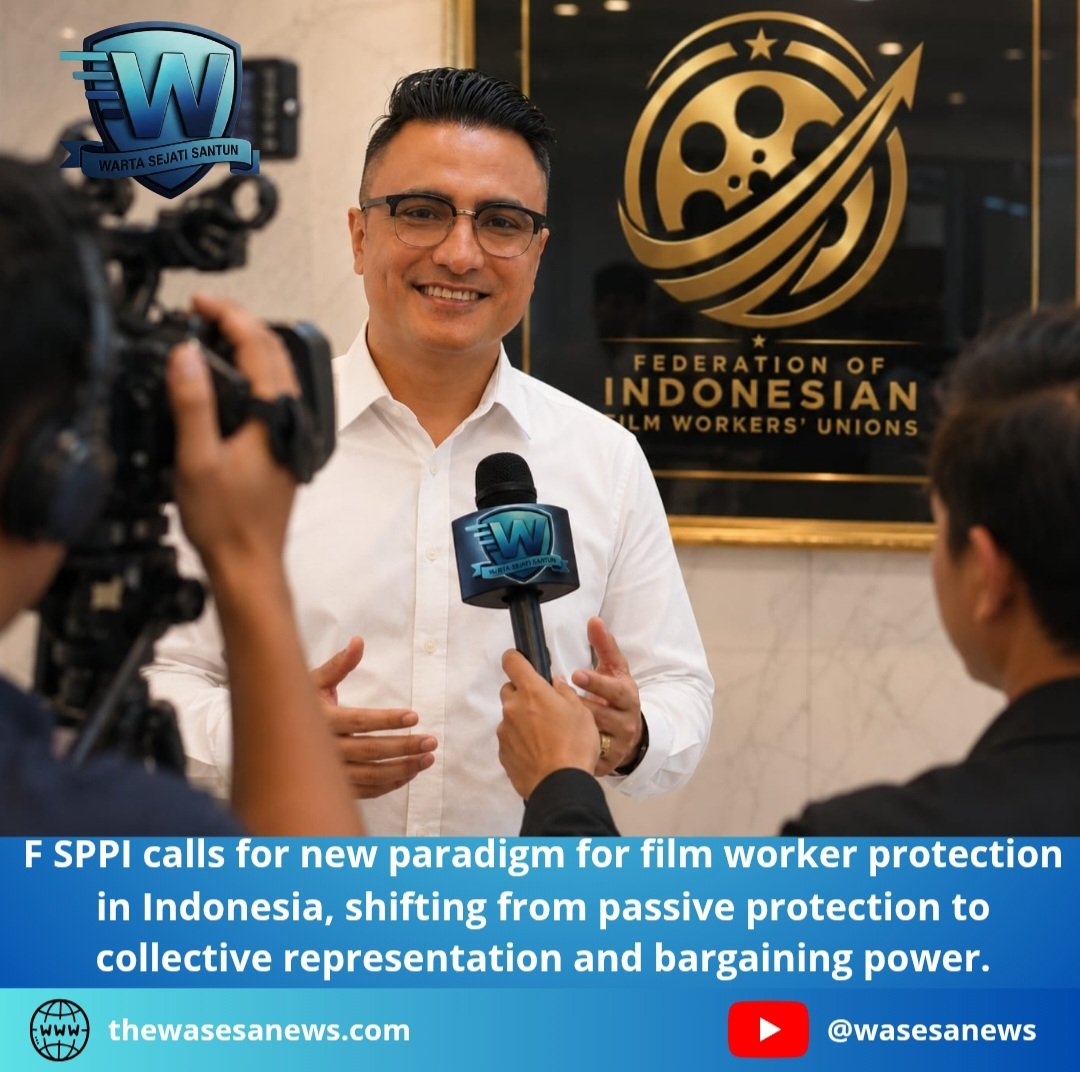
JAKARTA, thewasesanews.com — F sppi calls for new paradigm for film worker protection as the Federation of Indonesian Film Workers’ Unions (F-SPPI) advocates a structural shift in how film workers are protected in Indonesia, moving from passive legal safeguards to establishing effective representation and collective bargaining power, Sunday (9/8/2026).
This strategic call comes as Indonesia’s film industry experiences significant growth driven by surging production volumes, the expansion of streaming platforms, project-based employment models, and rapid technological advances, including artificial intelligence (AI). Amid these industry shifts, creative and technical workers continue to face persistent issues regarding job security, contract clarity, fair wages, excessive working hours, occupational safety and health (OSH), social security, and technological displacement.
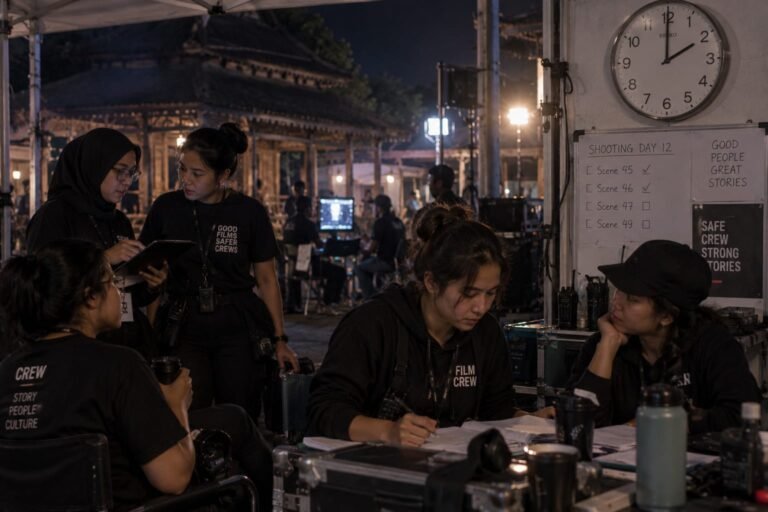
F-SPPI emphasizes that film production relies on a vast collective ecosystem beyond actors and directors. The workforce encompasses screenwriters, assistant directors, camera crews, art departments, sound engineers, editors, production personnel, and numerous technical and logistics professionals whose contributions are vital to every production.
In its policy paper titled “From the Right to Organize to the Power of Representation,” F-SPPI highlights that legal protection alone is insufficient if workers lack the capacity to defend their collective interests.
“The right to organize must therefore be translated into effective representation, knowledge, support, and bargaining power within employment relationships and the broader system of industrial relations,” stated the Central Executive Board of F-SPPI.
F-SPPI clarified that strengthening trade unions does not involve forcing workers into mandatory union membership. Freedom of association remains a fundamental principle, with the primary objective being the guarantee of democratic, independent, and effective representation mechanisms across the sector.
Furthermore, the struggle of film workers is intrinsically linked to the broader national labour movement. F-SPPI aims to build cross-sectoral synergies with trade unions, federations, and confederations while respecting their respective mandates and organizational autonomy.
Beyond handling disputes and workplace accidents, trade unions must engage in collective bargaining and participate in industry governance. F-SPPI stresses that workers’ interests should be integrated into industry policies and standards from the outset, rather than being defended reactively after problems arise.
Due to the project-based nature of the film industry—where workers frequently move between production houses and contract types—F-SPPI advocates for strong sector-based union representation capable of protecting workers across different companies and projects.
To establish comprehensive industry benchmarks, F-SPPI proposes the creation of the Indonesian Film Sectoral Labour Standards and Sectoral Collective Bargaining Agreements, covering contracts, wages, working hours, safety protocols, social security, and protections regarding AI and professional credits.
To facilitate structured social dialogue, F-SPPI also proposes establishing an Indonesian Film Industrial Relations Council to bring together government representatives, employers, union leaders, academics, and professionals.
Additionally, F-SPPI advocates for “Portable Worker Rights,” a framework allowing social security coverage, safety records, certifications, and professional credentials to remain attached to workers as they transition between different film projects.
“Ultimately, the change being advocated is a change in the position of workers: from being merely recipients of protection to becoming actors capable of voicing their interests and participating in shaping the future of the industry. From workers who are merely protected to workers who have bargaining power. From trade unions that merely respond to problems to trade unions that help shape the future of the industry. And from an industry that merely produces films to an industry that also respects the people behind those films,” stated Dr. Rizal Djibran, General Chairperson of F-SPPI.
F-SPPI reaffirms that a sustainable film industry must not be measured solely by market size or financial turnover, but by its ability to provide dignified working conditions for the workforce behind every production.
Press Release Issued By : Central Executive Board of the Federation of Indonesian Film Workers’ Unions (F-SPPI)
General Chairperson : Dr. Rizal Djibran, S.Sos., M.M., PD., CFA